



Pilot and Sailor are both famous for their vast array of Japanese specialty nibs, but did you know that Esterbrook also offers specialty nibs made especially for them by well-known American nibmeisters? I first explored all of Esterbrook's nib options in this article back in early 2023, but the choices have expanded since then, and Esterbrook's popularity has grown, too, so I decided it was definitely time for an update!
When choosing a new pen, there's nothing wrong with sticking with one of the core nib choices: Extra Fine, Fine, Medium, Broad, and Stub. But if you already have a few standard nibs in your collection and you're looking to try something a little more unusual, seeking out a nibmeister or ordering a custom nib online can be complicated and intimidating. Esterbrook makes it easy to try specialty nibs with their accessible and approachable options.
Their specialty nibs include Journaler, Scribe, Needlepoint, and Fude (the newest addition), and they now also offer a Mini Stub, which is great for writing in smaller spaces, like the grid of a Hobonichi planner! And, for line variation lovers, there are Fine Flex and Extra Fine Flex nibs as well.
This week, I revisit all the older ones and get up to speed on the new ones!
A few notes before we begin: As you read this article, you'll notice that Esterbrook has had more than one pattern on their nibs. When I originally wrote the article, JoWo was phasing out the etching on the edge and transitioning to a newer design. Some special editions, such as the Kachofugetsu Kingfisher, Kachofugetsu Flower, Rockstar, The Mariner, and the Accutron Spaceview also have nibs with unique engraving. All of Esterbrook's nib designs are nice, and it's kind of cool having a variety of different ones in your collection!
You will also see pen colorways in the photos that are no longer available, but the focus of this article is on how the nibs write, and that is unaffected by the appearance of the pens and nibs. Many of Esterbrook's classic resins, such as Nouveau Bleu, Sea Glass, Honeycomb, and Tortoise, are still as popular as ever, but there are always new and exciting materials to keep things fresh, as well.

Although I mostly focus on Esterbrook's Estie model in this article, the Estie, Model J, and Niblet—a pocket pen with the same full-sized #6 nib—can all take any of the specialty nibs. If you'd like to order a pen that isn't offered with the nib you're looking for, we may be able to swap the nib for you if we have one in stock on another pen. It doesn't hurt to ask!
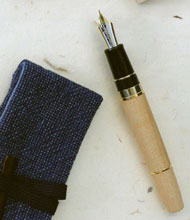
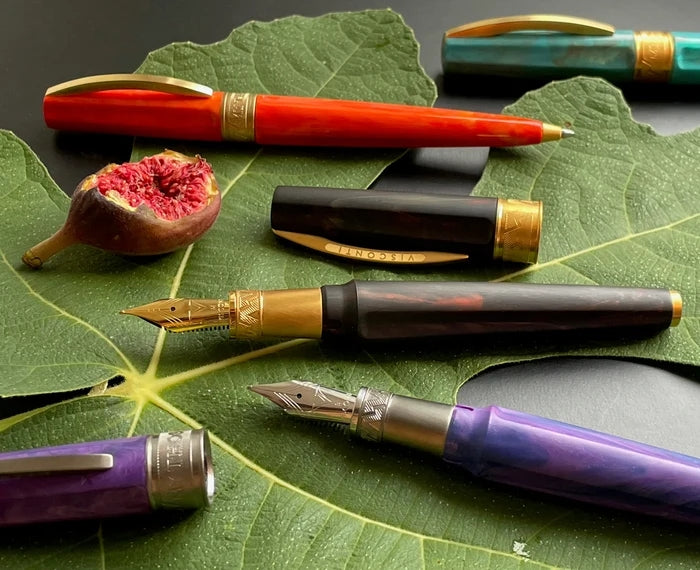
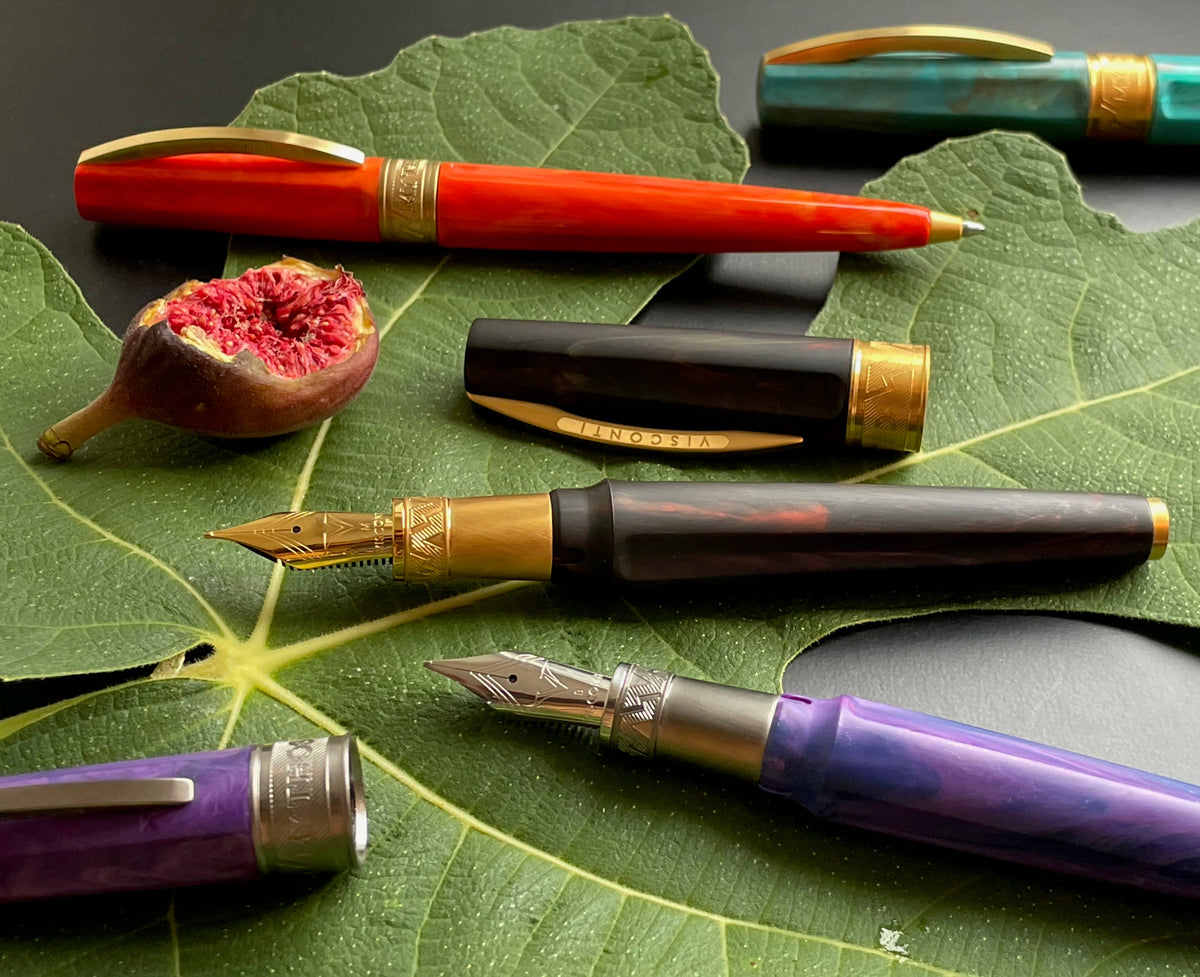
Some of the special nib options have also been available for the small and cute Esterbrook JR, inspired by Esterbrook's popular vintage J pens, although the JR is currently limited to Extra Fine through Stub. The JR uses a smaller #5 nib, so its nib is not interchangeable with the other pens. The pen on the upper right in the photo above is Esterbrook's JR Pocket Pen in the Beleza color variation.
How To Choose Your Nib
Having twelve nibs to choose from can seem a little overwhelming, but hopefully this article will help you understand their differences and figure out which will be the best for you. I love variety, so I own pens with quite a few different nibs, and I'm always excited to try new ones, but there are certain nibs that just suit my writing style better and feel more comfortable for me to write with. If you're able, it's always best to try writing with a nib at a store like Pen Boutique or borrow a friend's pen (with his or her permission, of course!). We now have tester pens for every nib in this article, and are always happy to walk you through the options. But, even if you can't try the nib you are interested in before you buy it, you can still narrow down the choices if you think about how you plan to use the pen.
Remember, when you order a pen from Pen Boutique, you have 30 days from the date of delivery to return or exchange it if you don't like it, as long as you have only dip tested it. This means you dip the nib in ink and try writing with it, but do not fill the pen with ink by using the internal filling mechanism (such as a converter or piston fill). Once the pen has been filled with ink (and/or the cartridges it may come with have been used) we do charge a 20% restocking fee. Please read and understand our return policy before trying your pen. When you get a nib custom ground for you by a nibmeister, the cost of the custom grind work is usually not refundable, so trying a pre-made specialty Esterbrook nib is definitely a safer option if you aren't quite sure about what you want!

Here are some things to consider when thinking about which nib you'd like to try:
- How large is your handwriting?
- Which hand do you use to write, and do you hold your pen at an unusual angle or with an unusual grip?
- Do you like your ink lines to be fairly uniform in color, or do you enjoy the look of shading, where different parts of each letter within a word are noticeably lighter or brighter than others?
- Similarly, do you like your ink lines to be uniform in width, or do you want to see line variation, where certain parts of a letter will be thicker and thinner?
- What kind of paper do you usually write on? Is it "fountain pen friendly" paper that isn't overly absorbent, or do you use lower quality paper that may be more susceptible to feathering and bleeding? What is your paper's texture: smooth, or more toothy?
- Do you usually write in print, cursive, or a mix of both? What languages do you write in?
- What is your goal for your new nib? Are you looking for a nib that is the most comfortable for you to write with, one that will change the look of your writing with no extra effort, or perhaps one for a specific situation such as taking notes in very small spaces, writing cards with a calligraphic look, or experimenting with a new handwriting style?
In my discussions of each nib below, you will see that the choice of nib can change the look of my writing quite a bit. For better or for worse, I just use my normal handwriting in my writing samples and do what feels natural with each nib, not making a special effort to write extra fancy or neat, and I am not trained with any special writing techniques, so you will see an honest example of how the nibs affect the look of my writing.
For my initial tests, I used a blank Maruman Mnemosyne notebook with a 7 mm (college ruled) guide sheet underneath. The ink was my bottle of Sailor Ink Studio 873, and it was very interesting seeing how the color varied between nibs. Later, I used Tomoe River paper to further experiment with some of the nibs. The ink in our tester pens when I updated this article was Sailor Black, so my newer writing samples are with that ink.
Needlepoint and Extra Fine

In this writing sample, I used the JR Pocket Pen pictured at the beginning of this article, but later I also compared an Estie Needlepoint nib, too.
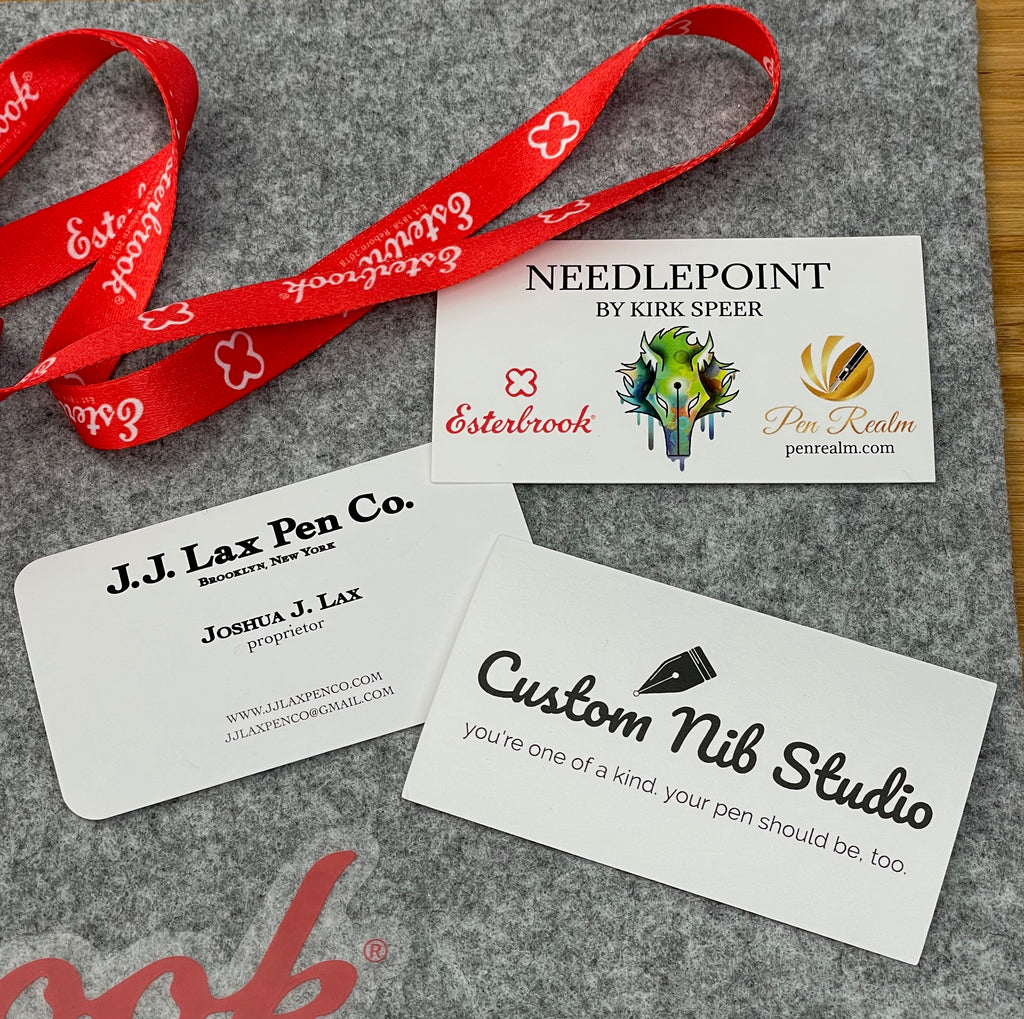
The Needlepoint is custom ground for Esterbrook by nibmeister Kirk Speer from Colorado. He's the talent behind Pen Realm, and is also an extremely nice guy. I've loved having Kirk visit our store for special nibmeisting events over the years, and I always look forward to seeing him at pen shows, as well. I love hanging out with Kirk, watching him work, and learning about pens from him.
As Kirk explained when interviewed by Esterbrook, "[The Needlepoint nib] gives a very precise line good for writing small in tight spaces like the margins of books or bibles or maximizing the use of a notebook. It can also be very good for artists and sketching. The nibs are a bit unique in that they don't grab or tear paper, and the shape of the tip is not common to traditional needlepoints. It was inspired in part by my love of the posting nib."
On their website description of this nib, Esterbrook advises,
Because of the super-fine point, really wet inks work great with a needlepoint. If you have inks that are gushers, the needlepoint acts to slow down the flow and lays less of the wet ink on the paper. It should be noted because it is so fine, a needlepoint is terrible for anything with shimmer in it as it will clog up the nib.
If you're into planners such as Hobonichi, you'll know that the small grids don't always accommodate for larger sized nibs. A needlepoint is a great way to have controlled writing that fits more into a smaller space.
And let's say you're not writing in one of your favorite planners, but on a cheap piece of printer paper. A needlepoint does really well on cheaper paper not specifically designed for fountain pens, given how controlled the ink flow is, which means less feathering and bleeding on the paper.

The Needlepoint is ground from a Fine nib, and when we first started getting Needlepoints in the store, the nibs had an "F" on them. Now when you get an Esterbrook with this grind, the nib will say "NP" right on it.
The Needlepoint is very smooth considering how sharp it is and how small you can write. I was able to write so small I could barely see my writing, and experienced no feathering even on inferior paper, yet the nib felt nicer than some extra-fine and even fine nibs I have tried. Do keep in mind that an extremely fine nib will almost always feel more "scratchy" than other nibs, though, no matter how well tuned it is. The benefit to this tradeoff is how precisely you can write.
For me, the Needlepoint was a little too extreme. I don't usually write that small, and I'm able to use fountain pen -friendly paper most of the time, so feathering and bleed-through isn't a big concern for me. I have customers who love it, though, and are very excited about having access to a nib like this. One of my favorite customers even got Kirk to custom grind two of his non-Esterbrook pens into Needlepoints during Kirk's first visit to our store. He loves the Needlepoint because it uses up ink more slowly and is perfect for the low-quality paper he has to use at work.
My first Estie was a Fine, but I was surprised by how much I loved the Extra Fine when I tested it for this article. I had been doing a lot of small writing in a Hobonichi planner, and I loved using both the Fine and the Extra Fine to write in my Hobonichi, so I decided to get a second Estie in Extra Fine. Here's a closeup (below) of the Extra Fine pen I used for my writing sample above. My Sea Glass Estie appears in the background.

Esterbrook's Extra Fine nib is very smooth and I love the precise feel. The amount of feedback you like is a very personal thing, but, for me, the amount of feedback the nib provides is perfect. Although Esterbrook's nibs are steel, they have a little bit of bounce so you don't feel like you are writing with a hard, unyielding nail, yet you feel in control. It's kind of like when you are driving a sports car and are more in touch with the road, rather than the cushy and insulated feel of the ride in a luxury sedan. I like this balance.
Fine and Medium

I absolutely love my Fine Estie, and I reach for it a lot. It's extremely smooth, performs well on a variety of paper, and is fun to write with. I used it for the writing sample above, and also to make a list of Estie color choices in my Oasis notebook when I was working on this article.

Esterbrook's Fine nib is very similar to the Extra Fine nib, except the line width is slightly larger and you see a little more shading in your ink.
When you choose a medium nib (see sample above), that's when you can really start to see a lot of beautiful shading in your ink, and the writing experience feels even smoother. The downside to thicker nibs is that your writing is more prone to feathering (especially on lower quality paper) and your details aren't as sharp. You may also experience smudging if you aren't careful, like happened to me on the word "prone" when I wrote the sample above. I honestly don't mind a smudge here and there when I'm using a fountain pen; I feel like it adds to the personality of the writing and gives it more character. However, you may disagree! Smudging is a real challenge for left-handers, as they are more likely to brush their hand over their writing before it's dry. For this reason, many lefties prefer Fine, Extra Fine, or Needlepoint nibs, which put down less ink and therefore dry more quickly. I have always found Medium nibs extremely comfortable and enjoyable to write with, especially for longer writing like letters or journals. When I first got into fountain pens, the majority of my nibs were Mediums, although I gravitated toward Fine and Extra Fine nibs over time.
Here's a closeup of one of Esterbrook's Medium nibs in the Cobalt Estie, an older color. The Medium nib is also used as the starting point for Esterbrook's Journaler nib, which I will talk about later.

Broad, 1.1 mm Stub, and Mini Stub
I tried the Broad nib on both Maruman Mnemosyne and then later Tomoe River paper. It felt great, and really showed off my ink, especially on the Tomoe River. As you can see, the lines are much thicker, so you can't write as small or as precisely, but the nib feels even smoother and wetter, so it's very fun to write with a Broad nib, especially if you want to create a bold effect or play around with ink that has a lot of sheen, shading, or even shimmer. It's also wonderful for signatures!
 The sample above was written on Maruman Mnemosyne paper.
The sample below was written on Tomoe River paper.

A Broad nib is much more likely to feather or smear, however, and broad writing can fill your page pretty fast. It also uses up a lot more ink. Some people adore broad nibs, while others would never want one. It's up to you!
Here are closeup photos of the Broad and 1.1 mm Stub nibs. As you can see, unlike the standard (Extra Fine, Fine, Medium, Broad, etc.) nibs that have rounded tipping material, the "nose" of a Stub nib is ground down, giving the nib a flat end. This produces a broad downstroke and a thin horizontal stroke.


Stub writing looks beautiful if you know how to hold and angle the pen correctly, but if you try to write in your normal handwriting, the squared-off corner of the tip can catch on the paper when you're writing lines that are partway in between horizontal and vertical, which feels unpleasant and doesn't look as nice. This is part of the reason that nibmeisters have invented variations on the stub nib that are more forgiving. When I first tried the Stub nib on Maruman Mnemosyne paper, I had trouble getting it to look nice and move smoothly across the paper. A few days later, I tried the same pen on Tomoe River paper and had a much nicer experience! I don't know if it was the smoother surface of the paper or that I was just angling the pen better, but my writing looked much, much better. So, if you try a Stub and have a bad experience with it, don't give up right away. Sometimes it just takes a little practice and experimentation.
My first attempt with the Stub nib is pretty embarrassing, but I'm going to show you anyway.

Yuck! Lots of feathering and bad contact with the paper. Here's my second attempt, which felt great and I think looks fantastic! Read what I wrote for tips about how to angle your Stub nib properly.

I ended up loving the Stub nib after I got the hang of it. Keep in mind that you'll need nice smooth and non-absorbent paper to get the best experience out of this nib. It puts out a lot of ink, so it is susceptible to feathering. I had a great experience with Tomoe River and Midori paper.
I had never tried Esterbrook's newer Mini Stub, which is custom ground from a Fine nib, so I was excited to compare the two for my update to this article. True to its beginning as a Fine nib, it is much narrower than a standard stub, with a downstroke that is around .6 mm or .7 mm, and has a Fine cross-stroke. I really enjoy it! The line variation is a lot more subtle than a typical stub, but it still gives your handwriting a little extra personality and I find it very easy to write with. I liked the auditory feedback and the "snappy" feel of the nib moving on the paper. I think it would be a great stub for someone with small handwriting or who needs to fit their writing into small spaces.

The Mini Stub, pictured here on a Niblet, has "MS" etched onto it. It is custom ground for Esterbrook by several different nibmeisters.

Journaler
If you want to see line variation in your writing but are lazy about holding your pen, a Journaler nib may be perfect for you! It's a lot more forgiving than a 1.1 mm Stub and felt comfortable to me right away.
Gena Salorino of the Custom Nib Studio in Los Angeles created this nib for Esterbrook. According to Gena, it's a "medium stub grind, based on the vintage Esterbrook 9314M nib. The idea is that it’s smooth and friendly enough for everyday use, gives your writing some flair, all without being too huge for practical writing." I love that Gena describes this grind as "friendly!" That word is so apt. Gena was an apprentice to veteran nibmeister John Mottishaw for nearly four years, so their work is derived from his style, but Gena's signature nibs have become well-known for their own trademark style and beautiful handmade quality.
Because the nib is a modified Medium nib instead of a modified Broad like the Stub, the downstroke is less wide and you can write smaller. You still get some line variation, with a wider downstroke and narrower side stroke, but the variation is nowhere near as extreme. I love that the Journaler is pretty subtle, but gives your writing a distinctive look that is just slightly quirky and fresh.
Here's my first experiment with the Journaler nib. I really liked it.
 A week or so later, I tried the same pen on Tomoe River paper and enjoyed it even more.

I used an oversized Sunflower Estie with the Journaler nib, and the pen looked as happy as my writing felt!

Scribe
The Scribe nib was created for Esterbrook by New York-based nibmeister Josh Lax, and is Josh’s take on an Architect nib. An Architect is a type of reverse Stub, where you get broad cross-strokes and narrow downstrokes. The Scribe nib is a modified Broad nib, and older versions of this nib have a B on them.

Take a look at the nib from the side. The tip is angled!

Josh's interview with Esterbrook on their website is quite interesting, and he is clearly very knowledgeable about Esterbrook's legacy nibs. As he explains,
One of the achievements of the old Esterbrook brand was their nibs. The pens in the relief nibs were great, and the renew points were a defining feature. And they did it all in a way that was accessible to a lot of people. I am glad that the brand has been revived by people who love pens, love the community and are trying to offer a pen that is as reliable and attractive as the originals, though they are updated for more modern tastes. I am also really excited to be included in the brand's nib offerings, because again, I value my part in the grand heritage of this craft.
What I have done is try to mimic two classic Esterbrook nibs, the original Relief nibs and the 2314/9314 Relief Stubs. These stubs were left oblique, meaning the front of the nib is angled down towards the left side if you look at the nib from the top. The 2314 was the first special Esterbrook nib I purchased and my favorite. In doing this project with Kenro, I think offering something that references a classic part of the brand is important. You also don't have many pen brands offering a nib like this anymore.
I found this nib very interesting to write with. It wasn't as user-friendly as the Journaler, but I really liked the look it gave my writing, and it looked neater and less "fancy" than my writing with the Stub nib. I like the clean look, and thought it was cool that it made my printing look neater with no extra effort on my part.
 I was a little surprised that I enjoyed using the Scribe nib for cursive writing, as a traditional Architect grind isn't very good with curves!
This nib performs best if you hold it at a lower angle to the paper than my natural one, so it may take you a while to find its sweet spot. Here's how my writing looked when I finally got in the groove. I used a Nouveau Bleu Estie. As you can see, the line variation is subtle, but has a distinctive look.

Fine Flex and Extra Fine Flex
At the time of the original article, Fine Flex and Extra Fine Flex were Esterbrook's newest additions to their nib offerings. These two nibs are available with any Estie of your choice and can also be purchased separately so you can install the nib unit in an Estie that you already own. Like their other nibs, they are steel nibs made for Esterbrook by JoWo. I borrowed two nib units and found them easy to install. All you have to do is firmly grasp the existing nib on your Estie and turn it counter-clockwise to unscrew the nib and feed, then insert the new nib unit, push down slightly to get it started, and screw it in clockwise. In the photo below, you can see how the nib unit looks when not screwed in all the way.

Here's how the nib units look when they are outside your pen. They include the nib and feed seated in a threaded housing. The black "ring" part right below where the nib emerges is supposed to be flush with your pen when fully installed.

As you can see, Esterbrook's flex nibs achieve their flexibility with small cut-outs in the side that allow the steel to bend slightly when you apply gentle pressure to the tip of the nib.
As Esterbrook describes it, "If you love a little line variation in your writing, or just want to have some fun with a new nib, the FLEX is a great option to consider. Designed to provide some pliability at the nib's point, pressure applied when writing will create variations in ink flow and, ultimately, your handwriting. This is great for those who want a bit of a calligraphic look to their writing or who generally write in a more Italic/cursive print."
 When I tried the nibs, I discovered that, despite the "flex" in the name, they are pretty firm, and really don't flex very much. This is typical of most steel flex nibs I have tried. I was able to get some line variation if I gave the nibs deliberate pressure, but, for me, it didn't show up much when I was actually writing.

I also observed that, although they are called Extra Fine Flex and Fine Flex, they are not comparable to Extra Fine and Fine nibs, so keep this in mind if you decide to order one. The Extra Fine writes more like a Fine and the Fine is more like a Medium or even Broad regular nib.
When I experimented with the nibs more on Tomoe River paper, I enjoyed them much more, although they still weren't quite what I had expected, as I was more familiar with the feel of a gold flex nib.

I had fun with the flex nibs, but had mixed feelings about them. I think they are a great option if you already own an Estie and want to play around with semi-flexible nibs. They are easy to use, very smooth, and enjoyable to write with. However, if I were to choose a new pen specifically because I wanted a flex nib, I would go with a gold flexible nib like Pilot's "FA" nib or a "soft" nib, like the ones available on the Pilot Falcon, Pilot Custom 74 in Lavender Fog, Pilot Custom 743, Pilot Custom Heritage 912, and Platinum #3776 Century. I prefer a softer flex nib, where the flexibility feels more natural. The Esterbrook flex nibs required me to make a conscious effort and use a firm hand to get line variation. They are also not a great choice if you want a flex nib that writes very fine, and I think their names are a little misleading. That said, I still think they are cool and applaud Esterbrook for adding flex nibs to their growing nib choice collection! (They are also a good choice if you are concerned about springing a gold nib, as gold nibs can be easy to flex too far and ruin if you write with too much pressure.)

The Flex nibs are sold without an extra charge when bought on a pen, and cost $60 each when purchased separately. The other custom nibs are not available separately, but would have a retail price of $90 if they were.

Fude
There is one final nib that has been introduced since my original article, and it's a very fun one: Esterbrook's Fude, which is made from a Fine Flex nib custom ground by nibmeister Josh Lax, creator of Esterbrook's Scribe nib. Like other Fude nibs, this nib is bent upward at the end, allowing writing that ranges from extra fine when the pen is held at a high (close to 90 degree) angle to very thick, almost like a paintbrush, when it is held low to the page.
 The word "fude" (pronounced foo-deh) means "brush" in Japanese, and these bent nibs were developed to imitate the brushes used in traditional Japanese calligraphy. When I hold the pen as my normal
49-degree writing angle, the nib writes with a line that is in between Fine and Medium (very slightly thinner than the plain Fine Flex line). If you flip the nib over and write in reverse, you can get a very thin, dry line.
The word "fude" (pronounced foo-deh) means "brush" in Japanese, and these bent nibs were developed to imitate the brushes used in traditional Japanese calligraphy. When I hold the pen as my normal
49-degree writing angle, the nib writes with a line that is in between Fine and Medium (very slightly thinner than the plain Fine Flex line). If you flip the nib over and write in reverse, you can get a very thin, dry line.
 Fude nibs are great for drawing, and I think it's extremely cool that Esterbrook added a Fude nib as an out of the box option!

Final Thoughts
I loved trying all twelve of Esterbrook's nib choices, and I really think it's great that Esterbrook offers us so many options and that they are working with nibmeisters to make it easy for us to have access to special grinds. I think it's so cool that they chose different nibmeisters and that each of their custom grind selections is unique. I also think Esterbrook's nibs in general--whether a "fancy" nib like a Scribe, Journaler, or Needlepoint, or a regular old Fine or Medium--are a joy to write with.
One more reason I love the Estie model is the special lock seal cushion cap closure that keeps it from drying out. The springy feeling cap takes a little getting used to the first few times you screw it on, but it works brilliantly. My Estie is always wet and ready to go, and I find myself reaching for it frequently, mostly just because it's such a pleasure to write with. The feel of its nib on paper makes me happy, I love how compatible it is with my favorite inks, and the complex material continually catches the light in unexpected and delightful ways.
 I don't think I can pick a "best" Esterbrook nib, but, for me, personally, I think my favorites are the Extra Fine, Fine, Journaler, and (after some trial and error!) Stub. I also love the new Mini Stub! Of course, that's what I think today. My nib tastes are changing all the time, and I am always eager to try new ones! I hope you will also give a new nib a try. Esterbrook's many options are definitely worthy.
-Laura P.
I love comments on my blog! Please leave comments if you like the articles, and, if you have any questions about this article, or any of the other blog articles, you can e-mail support @ penboutique.com. Thank you!


19 comments
Laura P. (blog author)
Hi Eric, thanks for your question about the adaptors that allow modern Esties to use vintage Esterbrook nibs. I reached out to our Esterbrook representative to ask, and, yes, they still make them! If you ask our customer service department, we should be able to order them for you.
Hi Eric, thanks for your question about the adaptors that allow modern Esties to use vintage Esterbrook nibs. I reached out to our Esterbrook representative to ask, and, yes, they still make them! If you ask our customer service department, we should be able to order them for you.
Eric Arnold
Laura thanks is much for this article, and for updating it. I have long been intrigued by Estie’s vintage nib offerings, but have not yet pulled that string. I was intrigued to hear that many of the nibmeisters that Kenro engaged for this effort based their work on one of the vintage nibs. I am particularly interested in the Journaler and the Scribe. Given that the nibs are still interchangeable (a long-time feature of Esterbrook) this is especially intriguing. I’ve been trying to find the convertor device that allows you to use vintage Esterbrook nibs in their modern pens, but it seem that it may have gone out of production. I’d be grateful if you could ask Kenro, the next time you are in contact with them. Thanks again for such an in-depth review!
Laura thanks is much for this article, and for updating it. I have long been intrigued by Estie’s vintage nib offerings, but have not yet pulled that string. I was intrigued to hear that many of the nibmeisters that Kenro engaged for this effort based their work on one of the vintage nibs. I am particularly interested in the Journaler and the Scribe. Given that the nibs are still interchangeable (a long-time feature of Esterbrook) this is especially intriguing. I’ve been trying to find the convertor device that allows you to use vintage Esterbrook nibs in their modern pens, but it seem that it may have gone out of production. I’d be grateful if you could ask Kenro, the next time you are in contact with them. Thanks again for such an in-depth review!
Beth Ritter
Thank you for this article. I really appreciate this review with your attention to the details of each nib. That is extremely helpful. Personally, I love my original Esterbrooks and the 2314F/2314M stub nibs and the 2442 Falcon nib. I am interested in trying the new Scribe and Journaler. Christmas is coming!
Thank you for this article. I really appreciate this review with your attention to the details of each nib. That is extremely helpful. Personally, I love my original Esterbrooks and the 2314F/2314M stub nibs and the 2442 Falcon nib. I am interested in trying the new Scribe and Journaler. Christmas is coming!
Michael O’Brien
Thank you Laura for your good work on this in depth review of the Esterbrook nibs and the amazing details included. I have been thinking of getting an Estie and this makes my nib choice really easy.
Cheers,
Michael ( regular customer)
Thank you Laura for your good work on this in depth review of the Esterbrook nibs and the amazing details included. I have been thinking of getting an Estie and this makes my nib choice really easy.
Cheers,
Michael ( regular customer)
Patrick
I just love your blogs! They are so packed with information!
My question is how well does the journaler nib work for the left-hander? I really want an Esterbrook and that nib seems to be the logical choice.
I just love your blogs! They are so packed with information!
My question is how well does the journaler nib work for the left-hander? I really want an Esterbrook and that nib seems to be the logical choice.
Clara
Hi! Just wanted to thank you for this post, it’s been tremendously helpful for me regarding the unusual nibs from Esterbrook (other brands only have the usual EF, F, M and B). Your writing is lovely and the photos have also been really useful.
Have a lovely day!
Hi! Just wanted to thank you for this post, it’s been tremendously helpful for me regarding the unusual nibs from Esterbrook (other brands only have the usual EF, F, M and B). Your writing is lovely and the photos have also been really useful.
Have a lovely day!
Bob Hazlett
Great post. I love my Esterbrook J from back in the 1950s. It was my first fountain pen. Now I am using it with the 2312 Italic nib. I didn’t see anything resembling the Italic in your post, so I assume Esterbrook is not offering it in their new generation of pens.
Great post. I love my Esterbrook J from back in the 1950s. It was my first fountain pen. Now I am using it with the 2312 Italic nib. I didn’t see anything resembling the Italic in your post, so I assume Esterbrook is not offering it in their new generation of pens.
Annie (aka "_s.p.a.r.k.l.e.z_" on Instagram)
Hi Laura! What a great post! I thoroughly enjoyed it. I love Esterbrook pens and JoWo nibs. I have also sampled most all their nibs and you were spot-on discussing each one. My favorite is the Journaler hands down. It is such a great nib. I now have two of them. The Scribe took the most time to get used to. I thought I’d like it more, but I don’t. The line variation between the medium and broad nibs is a big jump where the medium is more like a medium-fine and the broad is a true broad. Fun fact…I purchased my first Estie from PenBoutique; the Peacock with a Journaler nib. I love it! I really appreciate how much time and effort you put into this post and all the others as well. Thank you!
Hi Laura! What a great post! I thoroughly enjoyed it. I love Esterbrook pens and JoWo nibs. I have also sampled most all their nibs and you were spot-on discussing each one. My favorite is the Journaler hands down. It is such a great nib. I now have two of them. The Scribe took the most time to get used to. I thought I’d like it more, but I don’t. The line variation between the medium and broad nibs is a big jump where the medium is more like a medium-fine and the broad is a true broad. Fun fact…I purchased my first Estie from PenBoutique; the Peacock with a Journaler nib. I love it! I really appreciate how much time and effort you put into this post and all the others as well. Thank you!
Laurel Wright
Thank you for such a thorough review of the Estie nibs. I own three of them and love the nib selection. I use mostly F nibs, but I think the Journaler is my favorite. I do have one EF Flex nib, and my experience is exactly the same as yours.
I don’t think it’s necessarily true that you can’t buy the specialty nibs without a pen. I recently bought two extra Journaler nibs, one for my Cobalt Blue and another for my Nebulous Plume. They are sometimes out of stock for a while, but I called them and they told me when the nibs were expected in. Great customer service overall.
Thank you for such a thorough review of the Estie nibs. I own three of them and love the nib selection. I use mostly F nibs, but I think the Journaler is my favorite. I do have one EF Flex nib, and my experience is exactly the same as yours.
I don’t think it’s necessarily true that you can’t buy the specialty nibs without a pen. I recently bought two extra Journaler nibs, one for my Cobalt Blue and another for my Nebulous Plume. They are sometimes out of stock for a while, but I called them and they told me when the nibs were expected in. Great customer service overall.
Dr. W.F. (Duke) Fuehrer
Early 50’s when I was 10 my parents had friends who both used an EF Esterbrook to do their accounting work. I really wanted an Esterbrook. My parents purchased one for my BD and 6 months later my father found the pen chewed up in our pig pen. Obviously i’d dropped it when doing chores. (I lived on a small farm where we raised dairy, beef, swine, chickens and maintained large berry patches, fruit trees, gardens, etc.) I never replaced the Esterbrook believe they were $5 at the time. Now own many pens/brands. Your article on special grind nibs has me ready to order a Scribe. Thanks for pushing me back to Esterbrook.
Early 50’s when I was 10 my parents had friends who both used an EF Esterbrook to do their accounting work. I really wanted an Esterbrook. My parents purchased one for my BD and 6 months later my father found the pen chewed up in our pig pen. Obviously i’d dropped it when doing chores. (I lived on a small farm where we raised dairy, beef, swine, chickens and maintained large berry patches, fruit trees, gardens, etc.) I never replaced the Esterbrook believe they were $5 at the time. Now own many pens/brands. Your article on special grind nibs has me ready to order a Scribe. Thanks for pushing me back to Esterbrook.
Ed Ashley
Great review! I noted your reference in the Needlepoint discussion to wet and dry inks, and I wonder if you have done (or will do) a comparison review like this on the usual range of inks, as to wetness and dryness? It would be valuable to me; for example, I like Pelikan pens, and judge them to be wet writers on the whole, so that a dry ink is a good choice? And does that mean that Edelstein inks are on the dry side? Are Pilot (Iroshizuku) inks usually on the wet side? Or is this too general and too simplistic an approach? I am reluctant to buy 60ml jugs of ink, cause they will last me forever, and the little samples are a bad deal. 20-30 ml bottles seem to be a good size, for economy, variety, and enough supply to let you try a variety of pens and papers and nib grinds.
Great review! I noted your reference in the Needlepoint discussion to wet and dry inks, and I wonder if you have done (or will do) a comparison review like this on the usual range of inks, as to wetness and dryness? It would be valuable to me; for example, I like Pelikan pens, and judge them to be wet writers on the whole, so that a dry ink is a good choice? And does that mean that Edelstein inks are on the dry side? Are Pilot (Iroshizuku) inks usually on the wet side? Or is this too general and too simplistic an approach? I am reluctant to buy 60ml jugs of ink, cause they will last me forever, and the little samples are a bad deal. 20-30 ml bottles seem to be a good size, for economy, variety, and enough supply to let you try a variety of pens and papers and nib grinds.
Thomas Meyer
Curious you say they have certain nibs. They also have a techo nib which you failed to mention. Great job! Also, that you can get an adapter to use original Esterbrook nibs. Very smart idea.
Curious you say they have certain nibs. They also have a techo nib which you failed to mention. Great job! Also, that you can get an adapter to use original Esterbrook nibs. Very smart idea.
Regine
Thank you so much for an in-depth run through of all the Esterbrook nibs. Personally, I agree with your take on all the nibs (minus the EF / F flex nibs since I haven’t tried them yet.) My go to for writing are still the EF, F, M, Scribe and Journaler nibs. I like the variations that come from the Journaler and Scribe. Needlepoint is a tad bit too thin for me.
Thank you so much for an in-depth run through of all the Esterbrook nibs. Personally, I agree with your take on all the nibs (minus the EF / F flex nibs since I haven’t tried them yet.) My go to for writing are still the EF, F, M, Scribe and Journaler nibs. I like the variations that come from the Journaler and Scribe. Needlepoint is a tad bit too thin for me.
Julia L
Thanks for the in depth information about this different nibs, especially the specialty grinds. I don’t have a lot of experience with those so it is good to get more details on them. The journaler sounds interesting to me as well as the scribe. I’ve had experience with Jowo Flex nibs before and I find them difficult to flex. But I like the idea of trying them on different papers, I might have more luck with a different type than what I was using.
Thanks for the in depth information about this different nibs, especially the specialty grinds. I don’t have a lot of experience with those so it is good to get more details on them. The journaler sounds interesting to me as well as the scribe. I’ve had experience with Jowo Flex nibs before and I find them difficult to flex. But I like the idea of trying them on different papers, I might have more luck with a different type than what I was using.
Boni Loudon
What a fabulous and informative article. I want the scribe nib and the journaler. They look so fun to write with.
What a fabulous and informative article. I want the scribe nib and the journaler. They look so fun to write with.
Martin
Dear Laura, I enjoy all your blogs and this one is one of my most favorite…inspiring, fun, interesting, and so useful! I can’t wait to test the ‘journaler’ and flex. You make the ‘pennerding’ so much fun! Thank you! Martin
Dear Laura, I enjoy all your blogs and this one is one of my most favorite…inspiring, fun, interesting, and so useful! I can’t wait to test the ‘journaler’ and flex. You make the ‘pennerding’ so much fun! Thank you! Martin
Diana
Thanks Laura for the great in depth write up about these nibs and all the examples! I think I want to try a journaler nib in the future after reading and seeing your writing about it :-)
Thanks Laura for the great in depth write up about these nibs and all the examples! I think I want to try a journaler nib in the future after reading and seeing your writing about it :-)
Patty-Ann Lattimer
Thanks this was extremely interesting and very informative regarding the various nib sizes. I also love the Esterbrook pens, and use a broad size nib. I am left handed and write with a hook position. I find that my nibs tend to develop to my left hand writing and prefer not to share with a right hand writer.
Thanks again.
Thanks this was extremely interesting and very informative regarding the various nib sizes. I also love the Esterbrook pens, and use a broad size nib. I am left handed and write with a hook position. I find that my nibs tend to develop to my left hand writing and prefer not to share with a right hand writer.
Thanks again.
Daniel Muchinsky
Your blogs are very enjoyable as well as informative. I like the idea of different nib choices for Esterbrook. Back in the Dark Ages when I learned to write, the old Esterbrooks were the mandatory pen in school. There were many nib choices and the nibs were interchangeable. Is that the case with all the nibs you describe? Can a new Esterbrook be purchased with a selection of nibs ? That would. Be very enjoyable.
Your blogs are very enjoyable as well as informative. I like the idea of different nib choices for Esterbrook. Back in the Dark Ages when I learned to write, the old Esterbrooks were the mandatory pen in school. There were many nib choices and the nibs were interchangeable. Is that the case with all the nibs you describe? Can a new Esterbrook be purchased with a selection of nibs ? That would. Be very enjoyable.